
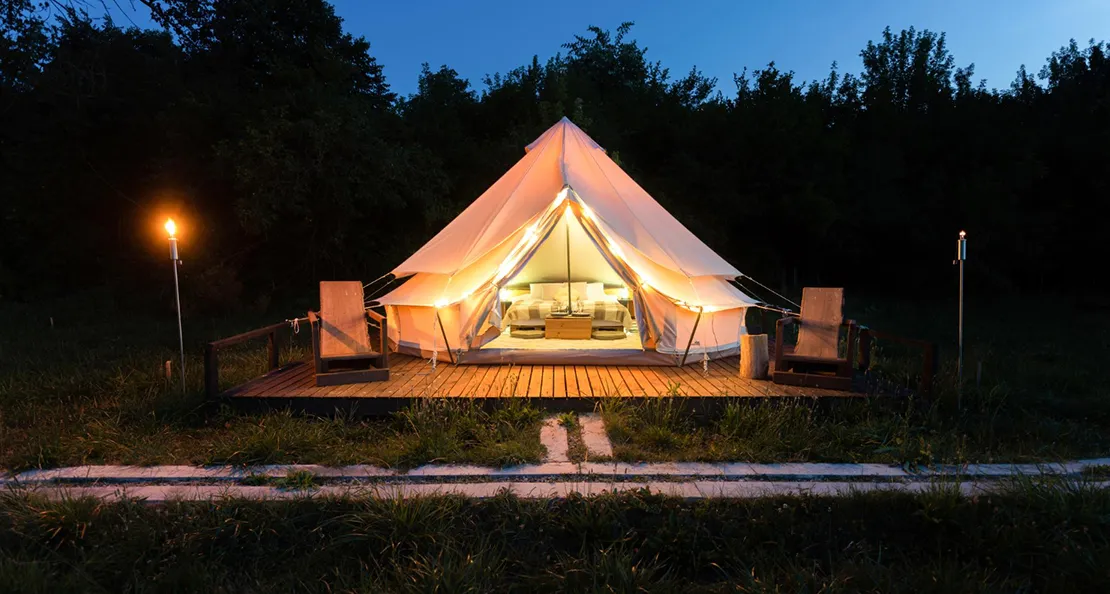
Imagine a safari operator in Arusha. Let us call her Grace. For ten years she has sent her guests to other people’s camps. This year, she is opening her own: twelve tents on a ridge above the plains. The first guests, a family from Germany, arrive on Friday.
It is now Monday. The rains came early. A truck with the last solar batteries is stuck in mud forty kilometres away. The plumber is waiting for fittings. Grace has not slept properly in a week.
Every camp owner knows this week. The question is whether it ends in panic or in a perfect first night.
What decides that first night
A tented camp looks simple: canvas, a deck, a view. But in the bush, every bag of cement, every litre of water and every kilowatt must be planned months before the first guest arrives.
- Approvals first. Building in or near a protected area needs the consent of the park or conservation authority and an environmental impact assessment. They take time, so they start first.
- Plan around the rains. Northern Tanzania has long rains from about March to May and short rains around November and December. A good programme moves heavy deliveries into the dry months.
- Borehole, river intake or trucked water, with storage, treatment and a wastewater plan that protects the land.
- Solar with battery storage for quiet nights, and solar water heaters or heat pumps for hot showers. Guests come to hear lions, not a generator.
- Machines, materials and crews must reach a site hours past the last tarmac, on time.
Seasonal or permanent
Seasonal camps move with the wildlife and leave little trace: light frames, removable decks, no permanent foundations. Permanent camps allow bigger suites, better bathrooms and pools, with firmer approvals and careful environmental design. The right choice depends on your guests, your operation and the rules of the area.
Built for what guests feel
Guests rarely remember the concrete. They remember the view from the bed, the first hot shower after a dusty game drive, the privacy of their deck, the fire under the stars. So we place every tent for sightlines and privacy, raise decks to catch the breeze, light the paths softly and safely, and design a mess and lounge where guests want to stay up late.
Friday, done the Lango way
Now picture Grace’s week again, with the batteries delivered in the dry season, two months early, by the Lango Group’s own trucks. The water tested. The tents snag checked. On Thursday night, Grace and her team sleep in the guest tents themselves, to be sure.
On Friday evening, the German family sits by the fire. The youngest asks if they can stay one more night. Grace smiles. That is the moment every camp is built for.
Frequently asked questions
Do you need approval to build a camp near a national park in Tanzania? Yes. Building in or near a protected area needs the consent of the park or conservation authority and an environmental impact assessment.
When is the best time to build a safari camp? Plan heavy deliveries for the dry months. In northern Tanzania the long rains run from about March to May, with short rains around November and December.
Next step: book a 30 minute feasibility call on WhatsApp, +255 783 061 448, and tell us about your site.
Read next: The Sound of the Generator · From a Sketch on a Napkin to the First Guest: The Lango Way in 8 Steps